Pakistan Tours
Discover Pakistan’s mountains, culture, and history through carefully planned tours that offer authentic experiences and unforgettable journeys.
Pakistan History
Pakistan has only existed as a country since 1947, when the partition of British India was implemented to create a separate nation for the Muslim population. Two men are generally credited with having secured the birth of Pakistan. One a poet and philosopher from Lahore named Allama Mohammed Iqbal who proposed the creation of a separate Muslim state. The other was Mohammed Ali Jinnah who finally put the proposal in place. The leader of the Muslim league Jinnah was respected by both Muslims and western Nations. He was also given the title of ‘Quaid-l-Azam’ which means ‘Great Leader’. After a long and fierce struggle with the British, he saw his dream come true in 1947. Unfortunately he died the following year but he is remembered and revered today by many images and places of importance around the country.
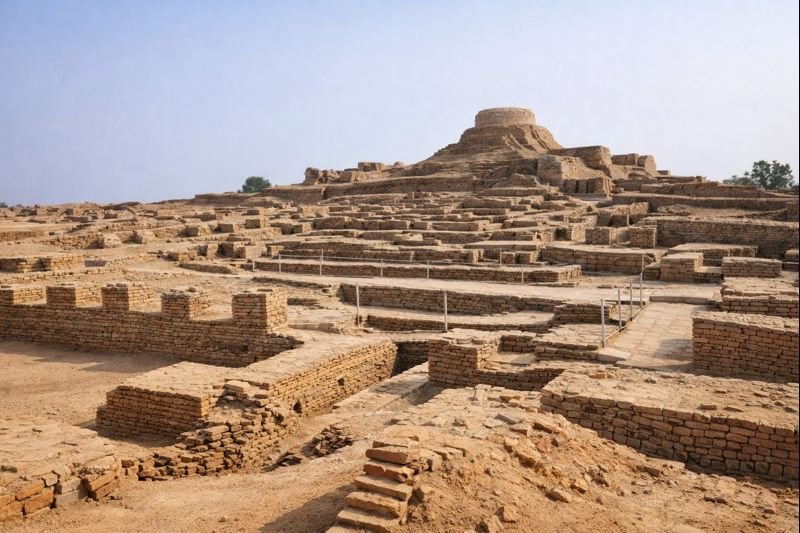
Pakistan has a population of approximately 162 million people and is the sixth most populated country in the world. Although the country of Pakistan has existed for a short time, civilization in the Indus River Valley dates from the 23rd Century BC. There was migration from Hindukush, central Asia and even Europe. Pakistan has strong cultural and historical roots. Half a dozen civilizations have flourished here and left their imprints. Historically, Pakistan is one of the most ancient lands known to man. Its cities blossomed even before Babylon was built. Its people practiced the art of good living and citizenship long before the celebrated ancient Greeks. Pakistan traces its history back to 2,500 years B.C., when a highly developed civilization flourished in the Indus Valley. Excavations at Harrappa, Mohenjo-Daro, Kot Diji and Mehr Garh have brought to light, the evidence of an advanced civilization existing even in more ancient times. Around 1,500 B.C., the Aryans overwhelmed this region and influenced the Hindu civilization, whose centre moved to Ganges valley, further east. Later, the Persians occupied the northern region in the 5th century B.C. up to the 2nd century AD. The Greeks came in 327 B.C., under Alexander of Macedonia. The army of Alexander the Great had conquered Persia in 327 BC, then moved on to what is now Pakistan. It is reputed that their descendants can be found in certain areas of northern Pakistan, notably in the Hunza and Kalash valleys.
The first Islamic influence took place in 709 with the arrival of Arabs. In 712 AD, the Arabs, led by Muhammad Bin Qasim, landed somewhere near modern Karachi and ruled the lower half of Pakistan for 200 years. During this time, Islam took roots in the soil and influenced the life, culture and traditions of the people. 300 years later, began the systematic conquest of South Asia by the Muslims from Central Asia, who ruled here up to the 18th century. It was not until Genghis Khan’s Mongols invasion in the 13th Century that this region became a powerful political force. Then the British arrived to take control and ruled for nearly 100 years over what is Pakistan now.
Independence Movement
The Muslim revival began towards the end of the last century when Sir Syed Ahmed Khan, a renowned Muslim leader and educationist, launched a movement for intellectual renaissance of the Muslims of South Asia. In 1930, the well-known poet-philosopher, Allama Muhammad Iqbal, conceived the idea of a separate state for the Muslims of South Asia. In 1940, a resolution was adopted by the All-India Muslim League, demanding a separate independent home land for the Muslims. After 07 years of un-tiring struggle under the brilliant leadership of Quaid-e-Azam (the great leader) Muhammad Ali Jinnah, Pakistan emerged on the world map as a sovereign state, on 14th August, 1947.
Geography
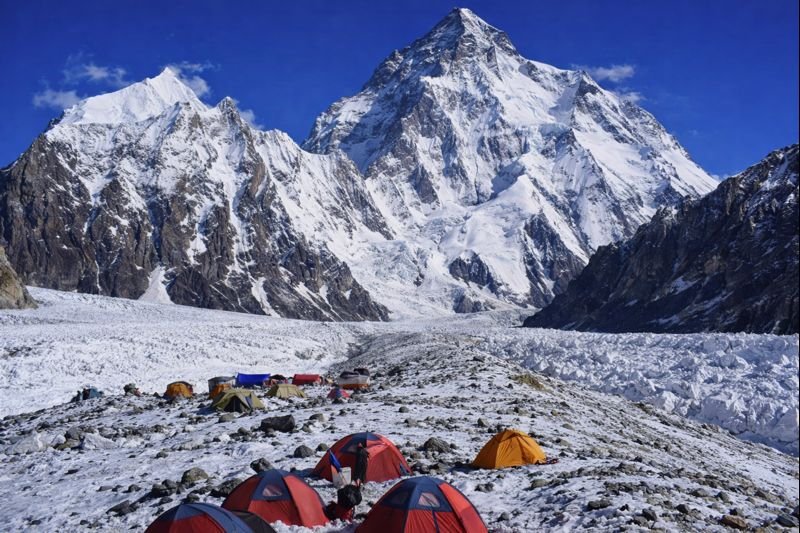
Pakistan covers an area of approximately 796,000 square kilometers – about the quarter the size of India. To the north, the Karakorum and Pamir Himalayas and Hindukush form the Great Highlands climbing up to 8,611 m (K2 – the world’s second highest peak). To the south west is the Baluchistan Desert – a plateau region with mountain ridges. The Indus River flows from the Himalaya to the Arabian Sea, near Karachi. The regions along the river constitutes a high fertile flood plain and are the most densely populated areas in the country. The south-east corner bordering India is a barren desert. The main exports of Pakistan are. Rice, fish, fruits and vegetables. Textiles (garments, bed linen, cotton cloth, and yarn). Leather goods, carpets and rugs.
Political
Pakistan is divided into four provinces. The Sindh, Balochistan, Punjab, & North-West Frontier Province. Northern Areas of Pakistan includes Gilgit, Baltistan, Ghizer, Diamir, Astore & Ganche districts have no political representation and no status under Pakistan’s constitution unlike Pakistan’s other four provinces.
The head of state is the president, elected for a five year term by an electoral college. The head of government is the prime minister.
Climate
Climate in Pakistan: Except for the Southern slope of the Himalayas, the country is extremely arid and the temperature varies across the regions. During the summer (May to August) the temperature reaches as high as 45-degree Celsius in the plains, but the hilly areas are very pleasant. The winter (November to March) is cooled by the sea breezes. The weather in southern Pakistan is pleasant during November and March and the best time to visit the Northern Pakistan is between April to October.